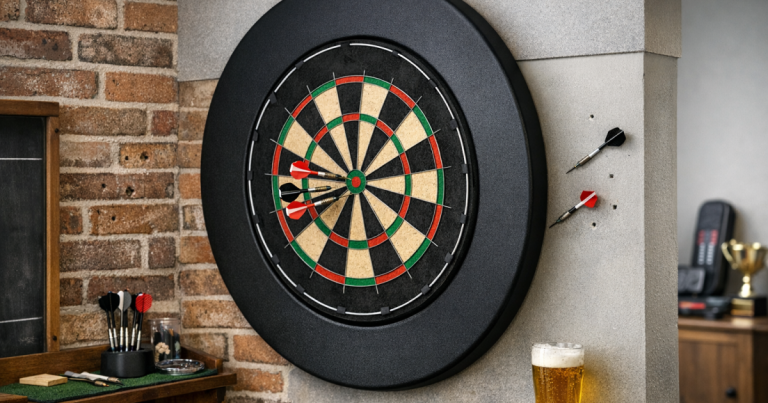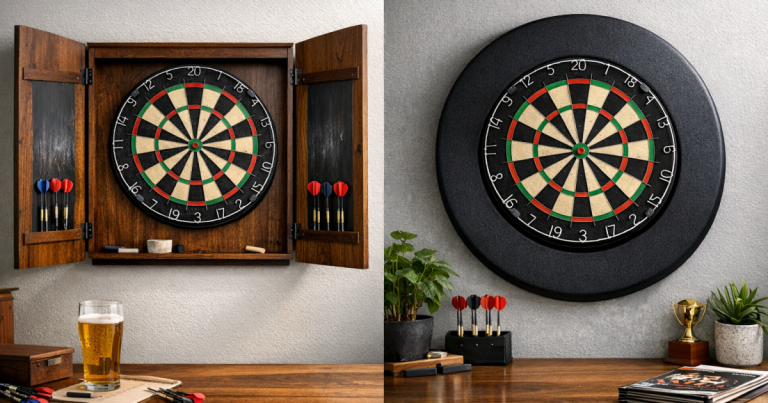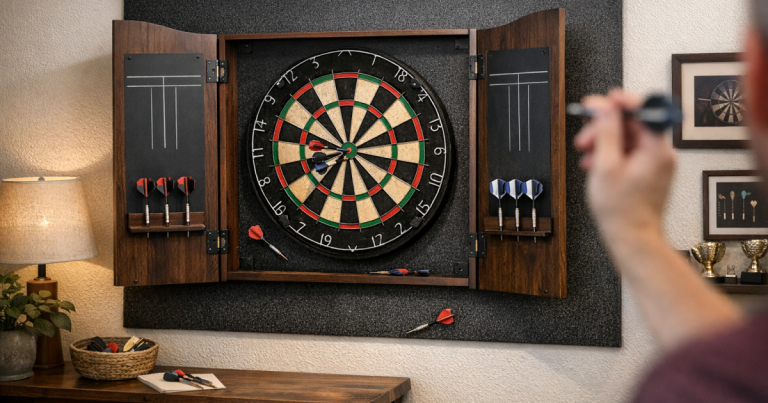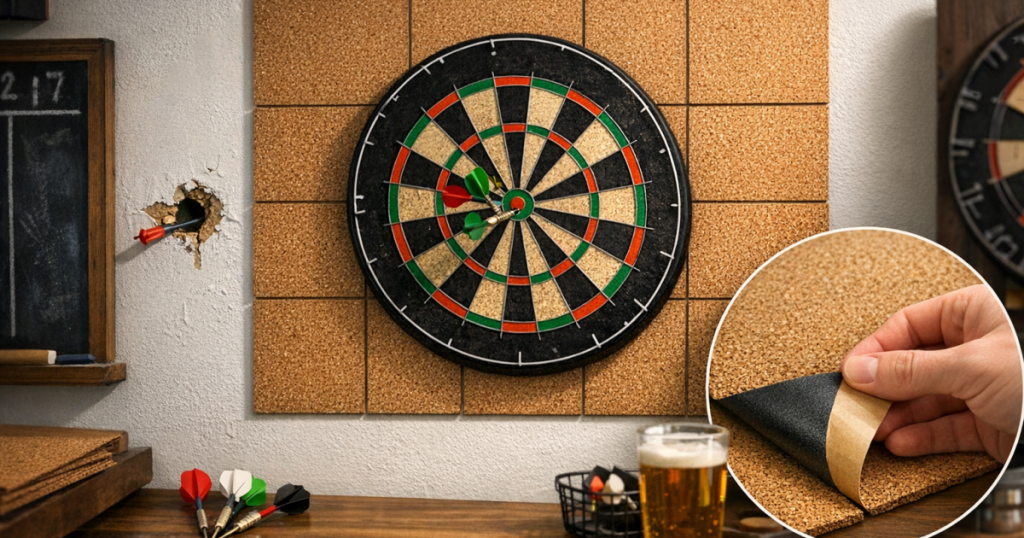
Misses around a home board are annoying because the wall damage usually appears just outside the surround, not in the obvious place. A Navaris Self Adhesive Cork Board Tiles review is useful because these tiles sit in the grey area between décor, noticeboard material and light-duty dartboard wall protection. They can make a plain darts corner look more deliberate, but they are not a magic shield for every steel-tip throw.
Quick verdict: these cork tiles are a sensible, tidy option for widening the protected area around a dartboard, especially in a spare room, office or low-traffic practice corner. The big caveats are thickness, adhesive performance and the surface underneath. If you expect hard, frequent misses from steel-tip darts, treat them as part of a protection plan rather than the whole answer.
Product overview
The Navaris Self Adhesive Cork Board Tiles are peel-and-stick cork tiles intended for wall use, pinning notes and creating a cork-board style surface. For darts, the appeal is obvious: they can be arranged around a bristle board to cover the areas most likely to catch strays, without building a heavy timber backboard or committing to a pub-style cabinet.
They suit the kind of home setup where the board lives in a bedroom, study, utility space or garage corner and the owner wants something neater than a bare wall full of pinholes. Cork also has a warmer, softer look than plain foam or rubber, so it can blend more easily into a room that is not purely a darts space.
The catch is that cork tiles are not purpose-made dartboard surrounds. A proper surround is shaped and sized specifically to sit around the board; these tiles are modular wall panels. That makes them flexible, but it also means you need to plan your layout, check the current tile dimensions and decide whether the listed thickness is enough for your throwing style.
Key specs
- Product type: self-adhesive cork wall tiles.
- Main darts use: extra wall coverage around, above and below a dartboard.
- Installation style: peel-and-stick backing applied to a suitable clean, dry wall surface.
- Surface finish: natural cork appearance, with visible texture and colour variation.
- Coverage: modular layout; measure your own wall space before deciding how many packs are needed.
- Thickness and pack contents: check the current retailer listing before buying, as this affects both coverage and impact protection.
- Compatibility checks: verify suitability for painted plaster, plasterboard, wallpaper, textured walls and any rented-home restrictions before applying.
Pros and cons
Pros
- Creates a wider catch area than a standard tight dartboard surround alone.
- Looks more decorative than many improvised wall protection fixes.
- Modular tiles make it easier to build coverage around awkward corners, sockets, shelves or a cabinet.
- Can help hide existing minor marks if the wall is already scuffed.
- Useful for casual practice areas where occasional misses are the main concern.
- Does not require a bulky frame if the wall surface and adhesive are suitable.
Cons
- Not designed specifically for steel-tip darts, so protection depends heavily on tile thickness and dart impact.
- Self-adhesive backing can be unforgiving on painted or delicate surfaces.
- Thin cork may still allow sharp dart points to mark the wall behind.
- Edges and joins can look messy if the layout is rushed.
- May not be robust enough for heavy group play, children learning, or very high-miss practice sessions.
- Removing adhesive tiles can lift paint or leave residue, especially in rented properties.
Performance in real use
As dartboard wall protection, these tiles perform best when used to cover the “nearly missed” zone rather than the entire room. Most home players do not need the whole wall covered; they need a sensible buffer above the board, either side of the trebles and around the lower area where tired throws drift. A neat rectangle or stepped pattern around the board usually looks better than a random patchwork of tiles.
For dart impact, the key issue is depth. Cork has give, but a steel-tip dart is narrow and sharp. If the cork is relatively thin, a firm throw can still travel through enough to leave a mark behind it. That does not make the tiles useless, but it means they are better viewed as light-to-moderate protection. For a serious home board with regular practice, a dedicated surround or a layered backing board gives more confidence. The differences in coverage and bounce-out protection are worth reading through in this dartboard surround thickness and coverage guide before relying on cork alone.
Adhesion is the other make-or-break point. Peel-and-stick tiles need a clean, flat, dry surface. Dusty garage walls, textured paint, old wallpaper and uneven plaster can all reduce contact. In a typical UK spare room with painted plasterboard, they should be easier to position, but you still need to prepare the surface properly and press each tile evenly. If your wall paint is already flaky, adhesive cork is likely to remove weak paint when adjusted or removed.
Visually, the Navaris tiles have a genuine advantage over many DIY wall-saving ideas. Cork softens the look of the darts corner and can make a board feel intentionally framed, rather than simply mounted on whatever wall was available. That matters in a living space. The trade-off is that natural cork varies, so batch colour and edge alignment are worth checking before you commit to a large visible panel.
Noise reduction is limited. Cork may soften some wall contact sound compared with a bare wall, but it will not transform the thud of darts entering a bristle board or the vibration travelling through a shared wall. If noise is part of the reason you are considering cork, look separately at board mounting and backing materials; our guide to making a dartboard quieter for neighbours covers that problem more directly.
Maintenance is straightforward: keep the surface dry, avoid dragging sharp objects across it, and replace individual tiles if one area becomes chewed up. The modular format helps here, because a damaged tile does not necessarily ruin the whole setup. For value, the product makes most sense when you want a clean-looking catch panel and are realistic about the limits of adhesive cork.
Who it’s best for / who should skip it
These tiles are best for home players who want a tidy, affordable-looking way to protect the wall around a bristle dartboard from occasional misses. They work particularly well for casual practice, neat garage corners, office boards and setups where décor matters almost as much as protection.
They are also a good fit if your existing surround is just a little too small. A standard surround can protect the immediate ring around the board, while cork tiles can extend protection into the wider danger zone without making the wall look overbuilt.
Skip them as your only line of defence if the board is used by beginners who miss widely, groups throwing after a few drinks, or serious players doing long scoring sessions every day. In those cases, you are more likely to appreciate thicker dedicated protection, a cabinet and backing board, or a purpose-made surround system.
Renters should be cautious. Self-adhesive products are convenient, but they can damage paint on removal. If you need a no-trace setup, a freestanding board stand, a removable backing panel or a cabinet fixed with permission may be a safer route.
Questions people ask
Will these cork tiles stop darts damaging the wall?
They can reduce minor wall marks from light misses, but they should not be treated as guaranteed steel-tip protection. Check the listed thickness and consider extra backing for frequent or hard throws.
Can I put self-adhesive cork tiles behind the dartboard itself?
You can place them behind the board area, but the board still needs to sit securely and correctly on its mounting. Do not use cork tiles as a substitute for a stable dartboard fixing.
Are cork tiles better than a dartboard surround?
Not usually for direct dart protection. A surround is purpose-made for the board edge, while cork tiles are better for extending coverage across the surrounding wall.
Will they work in a garage darts setup?
They can, provided the wall is flat, dry and clean. Cold, dusty or rough garage surfaces can make adhesive performance less reliable, so surface preparation matters.
Alternatives
The closest alternative is a dedicated dartboard surround. It will usually look more purpose-built and gives focused protection immediately around the board, but it will not cover as much wall unless you add a backing panel. For many homes, the strongest setup is a proper surround plus cork or another panel material outside it.
A second option is a cabinet or larger backboard arrangement. This is less subtle than cork tiles, but it can create a more complete darts station with space for accessories, chalk or a scoreboard. It is the better direction if your darts area is permanent and you want a more robust structure rather than a decorative wall covering.
Verdict + score
The Navaris Self Adhesive Cork Board Tiles are a smart-looking, flexible wall protection option for casual home darts setups, but they are not a full replacement for a purpose-made surround or thicker backing. Their strengths are neat styling, modular coverage and simple installation; their weaknesses are uncertain impact resistance, adhesive risk and limited suitability for heavy steel-tip abuse. If you want a cleaner darts corner and understand those limits, they are worth shortlisting as part of a layered setup. Score: 7.6/10.
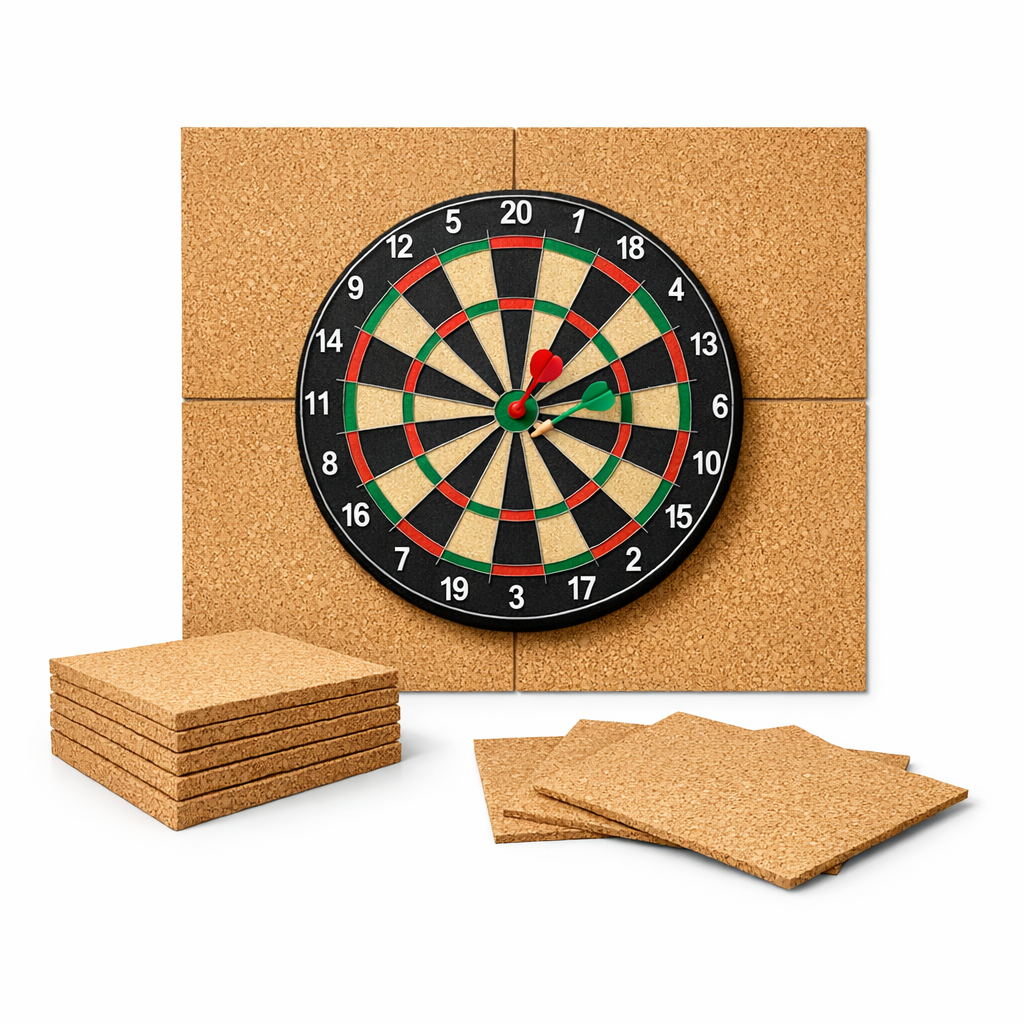
Navaris Self Adhesive Cork Board Tiles
If you want a cleaner darts corner and understand those limits, they are worth shortlisting as part of a layered setup.
You might also like: How to Rotate a Bristle Dartboard Without Misaligning the Numbers.