A noisy home oche can make a quick practice session feel bigger than it is, especially in flats, terraces and shared family spaces. A quiet darts mat setup is less about one magic accessory and more about controlling vibration, movement and hard-surface contact from the throw line to the wall.
Most of the sound comes from three places: feet shifting on the mat, the oche moving or tapping against the floor, and darts landing in the board or surround. Deal with those in order and the whole area usually feels calmer, more solid and more enjoyable to use.
What to know first
- A thicker mat is not automatically quieter if it slides, curls or sits on a hard uneven floor.
- The oche itself often causes more noise than the mat, especially if it is a raised bar with a hollow underside.
- Hard floors amplify vibration more than carpet, laminate and suspended timber floors being the usual trouble spots in UK homes.
- Board noise travels through the wall, so floor quietening helps, but it will not solve every sound issue on its own.
- The neatest setup is usually a layered one: stable floor contact, a non-slip mat, a secure oche and soft wall protection around the board.
Work out where the noise is actually coming from
Before changing anything, throw a short leg and listen from different positions in the room. If possible, ask someone to stand in the room below, in the hallway or on the other side of the wall. You are listening for different types of noise: a dull thud from footsteps, a slap from the mat, a clack from the oche, or a sharp knock from darts hitting the board area.
This matters because the fixes are different. A mat that rustles or slaps needs better floor grip. A raised oche that knocks needs padding or firmer fixing. A board that sounds loud through the house may need better wall isolation or a different location. Guessing often leads to adding more material without solving the main annoyance.
Start with the floor under the mat
The floor decides how much vibration gets amplified. Concrete tends to feel solid and relatively quiet, while suspended timber floors can behave like a drum skin. Laminate can add a sharp tapping noise because the hard surface reflects sound and any tiny gap underneath can make movement louder.
If your mat is on a hard floor, a thin non-slip rug underlay can reduce sliding and soften the contact. Use a flat underlay that does not create a spongy or uneven throwing stance. The aim is not to make the floor bouncy; it is to stop the mat moving and to reduce the slap between mat and floor.
On carpet, noise is usually lower, but the oche can become less stable. A mat can creep across pile during longer practice sessions, and a raised oche may sink at one end. In that case, the quietest setup is often the one that stays still. Keep the mat flat, avoid thick ridges under your front foot, and check that the throw line remains square to the board.
Make the mat behave like part of the floor
A darts mat should lie flat, stay aligned and avoid making its own noise. If the edges curl, the mat shifts every time you step forward, or the underside has a slick finish, the setup will always sound busier than it should.
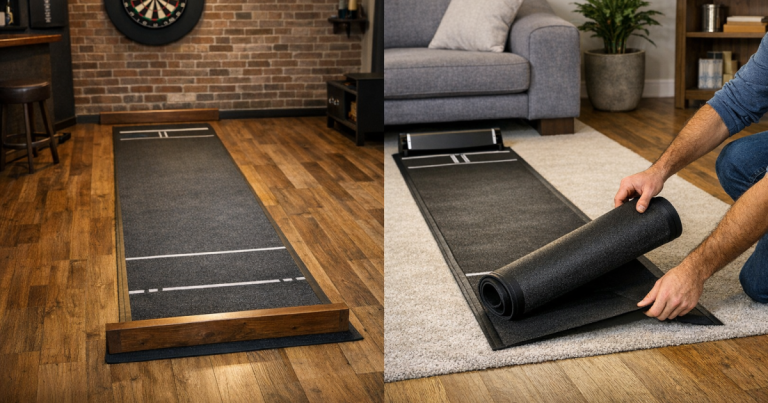
Unroll the mat fully and let it relax before judging it. Some mats need time to flatten after storage. If it still lifts at the corners, place weight along the edges when not in use, or rotate it if one end has taken a set. Avoid using anything that creates trip points along the throwing area.
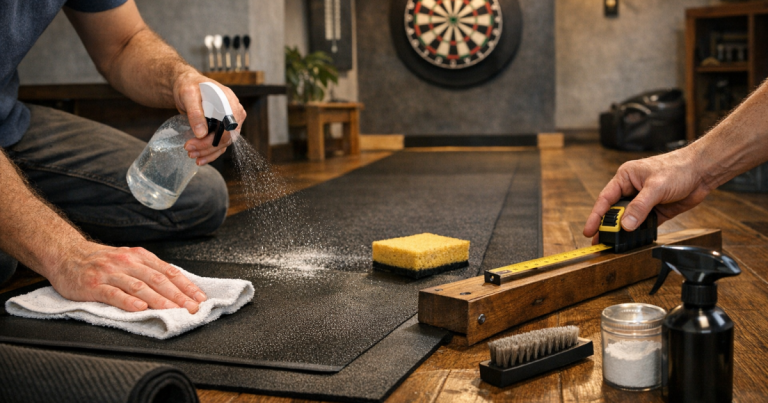
Alignment also affects noise. When the mat sits slightly off-centre, players tend to make small foot corrections before throwing. Those little shuffles add up. If you are resetting your layout, use the measurements in this guide to marking dartboard height and oche distance accurately so the mat, board and throw line all work together.
Quietening a raised oche
A raised oche is excellent for consistency because your front foot meets a fixed stop every throw. The trade-off is that a hard oche can tap, scrape or clack against the floor. This is especially noticeable on laminate, tiles or thin vinyl.
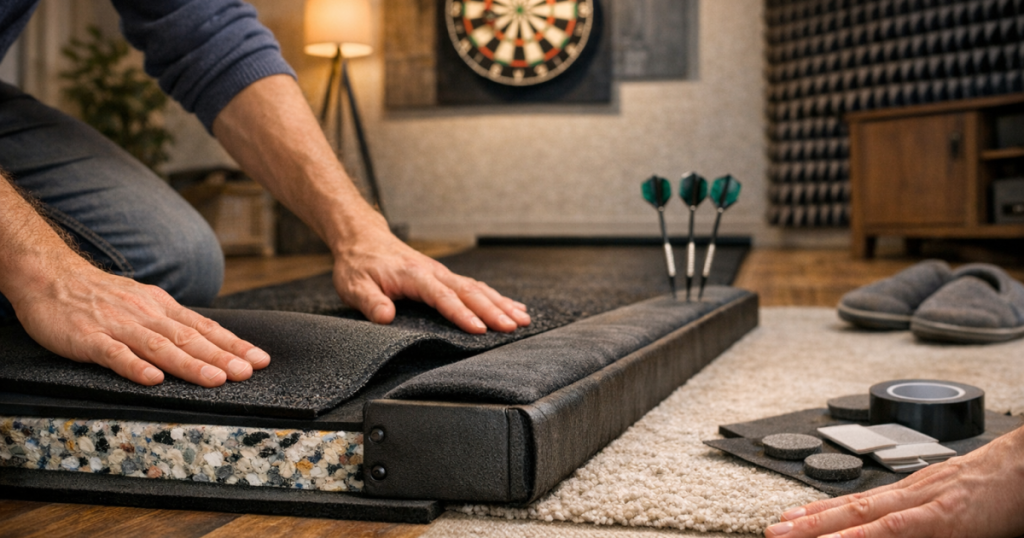
First, check whether the oche is moving. If it shifts even slightly when your shoe touches it, the sound will be louder than necessary. A non-slip strip, thin rubber contact pad or low-profile grip tape underneath can help it sit more quietly. Keep anything under the oche even across its length so it does not rock.
Second, look at the underside. Hollow plastic and lightweight raised bars can act like small sound boxes. Adding a soft contact layer underneath the base can reduce that hollow tap. Do not make the oche too soft, though. It still needs to feel like a reliable physical line rather than a cushion.
If you use a separate oche rather than one built into the mat, mark its position subtly so it returns to the same place after cleaning or storage. Consistency reduces adjustment, and less adjustment usually means less noise.
Keep the throw line solid without making the room harsh
The quietest oche area is not always the softest one. Too much padding can make your stance feel vague, particularly if your front foot sinks or the mat flexes as you throw. That can lead to extra foot movement, which makes more sound and can affect rhythm.
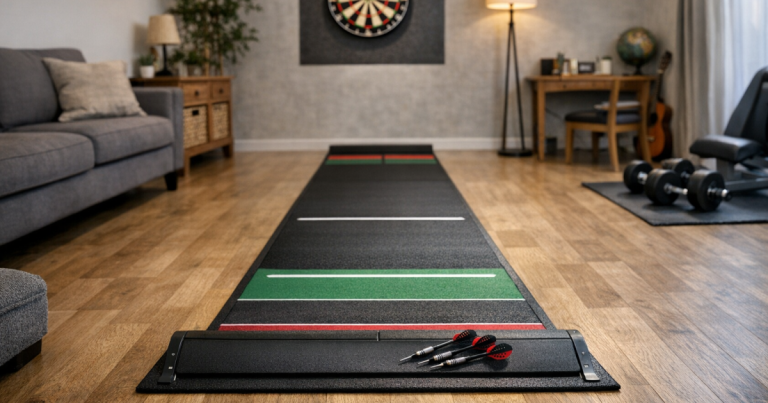
A good target is firm underfoot, grippy on the surface and slightly damped underneath. In a multi-use room, this can be as simple as a proper darts mat laid flat over a thin anti-slip layer. In a dedicated darts corner, you might prefer a more permanent-looking throw area with a mat and raised oche that are kept in place between sessions.
For a fuller room-planning approach, including how the mat, oche and surrounding floor space fit together, the walkthrough on creating a match-ready darts mat and oche area is a useful next step.
Reduce board and wall noise as part of the same setup
Even if the article is about the mat and oche, the board area matters because players often notice the total noise rather than one source. A dart hitting a bristle board produces a short impact sound; a dart striking a hard wall, cabinet edge or bare plaster can be much sharper.
A surround can soften missed darts and reduce the harsh knock of impacts around the board. A cabinet can change the sound too, sometimes making the area feel neater but adding a harder surface if darts hit the doors or frame. The quieter choice depends on how accurate the players are, how close the board is to shared walls and whether the setup is used mainly for casual games or regular practice.
Also check the board mounting. If the board wobbles or the fixing plate is loose, dart impact can create extra vibration. A board should sit flat and secure, with no rattling parts behind it. That alone can make the whole setup feel more controlled.
Freestanding setups and vibration
Freestanding dartboard stands are useful when you cannot or do not want to drill into a wall, but they introduce a different noise path. Instead of wall vibration, you may get stand movement, floor vibration through the legs, or a slight metallic rattle when darts land.
Place the stand on a stable surface and make sure all contact points sit evenly. If one leg is only just touching the floor, the stand can rock and sound louder than expected. Thin rubber contact pads under the feet can help, provided they do not make the stand unstable or alter the board position unpredictably.
For rented homes, garages and temporary practice spaces, it is worth reading how to set up a freestanding dartboard without drilling before trying to solve noise at the mat alone. The stand, board height and oche line need to be treated as one layout.
Small habits that make a noticeable difference
Some noise comes from the setup, but some comes from how the area is used. You do not need to tiptoe around the oche, but a few habits can keep practice quieter without making it feel precious.
- Step onto the mat rather than stamping into position.
- Keep outdoor grit off the mat so shoes do not scrape or crunch.
- Return darts calmly rather than dragging feet back across the throw area.
- Store the mat flat or rolled properly so it does not develop noisy curled edges.
- Check the oche position before a session instead of nudging it after every few throws.
In shared homes, agree the quietest throwing times if the board is near a bedroom, party wall or downstairs ceiling. A well-damped setup helps, but darts still has impact noise by nature.
A sensible order for quietening the area
If you want to make changes without overdoing it, work through the setup in this order:
- Flatten and align the mat so it does not slap, creep or curl.
- Add a thin non-slip layer if the floor surface is hard or slick.
- Pad the underside of a raised oche only enough to stop tapping and rocking.
- Check the board mount for wobble, rattle or poor wall contact.
- Use wall protection around the board to reduce sharp missed-dart impacts.
- Re-test from outside the room, because noise can travel differently through floors and walls.
This approach keeps the focus on causes rather than clutter. The aim of a quiet darts mat setup is to make the throw area feel planted, not to bury it under layers that change your stance.
Questions people ask
Will a thicker darts mat always make the oche quieter?
No. Thickness can help, but grip and stability matter more. A thick mat that slides, curls or rocks under a raised oche can be noisier than a thinner mat that sits flat.
Can I use a normal rug under a darts mat?
You can, but it needs to stay flat and firm. A deep or uneven rug can make your stance less consistent and may create a trip edge around the throw line.
How do I stop a raised oche clacking on laminate?
Use a thin, even non-slip contact layer under the oche and check that it does not rock. The oche should feel solid against your foot, not cushioned or unstable.
Is carpet better for a quiet darts setup?
Carpet usually reduces foot noise, but it can make mats and oches less precise if they move on the pile. Check the throw line regularly and keep the mat square.
Why can people still hear darts in another room?
Dart impact travels through walls, floors and fixings, not just through the air. If the mat is quiet but the board is on a shared wall, the board area may need attention too.
What stands out
A quieter darts area comes from removing movement. Keep the mat flat, stop the oche tapping, soften hard contact points and make sure the board is mounted securely. Once those basics are right, the setup feels more professional, the room sounds less harsh, and practice becomes easier to enjoy without feeling like you are disturbing the whole house.