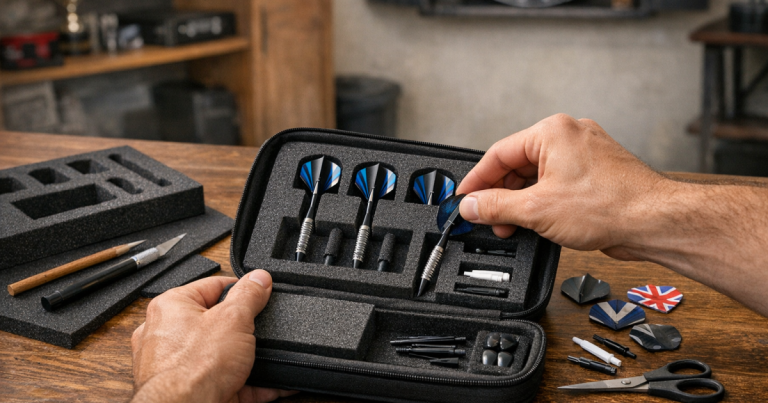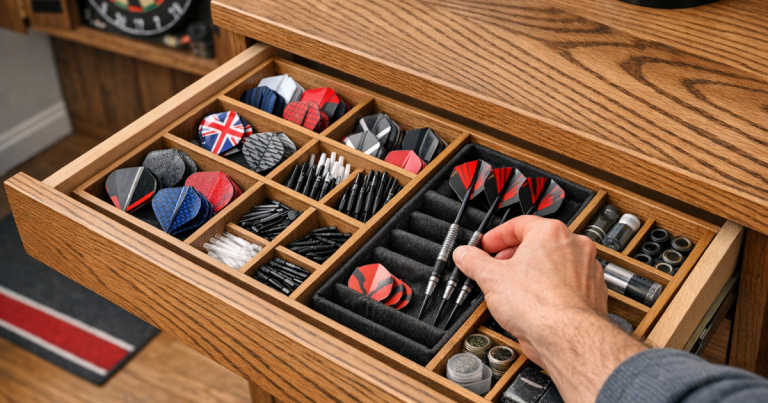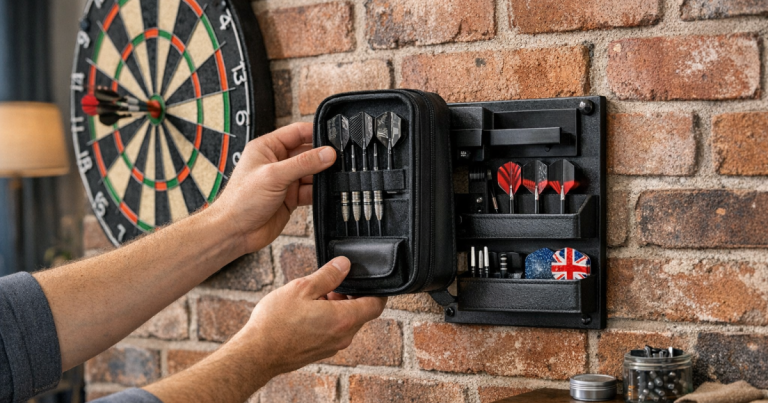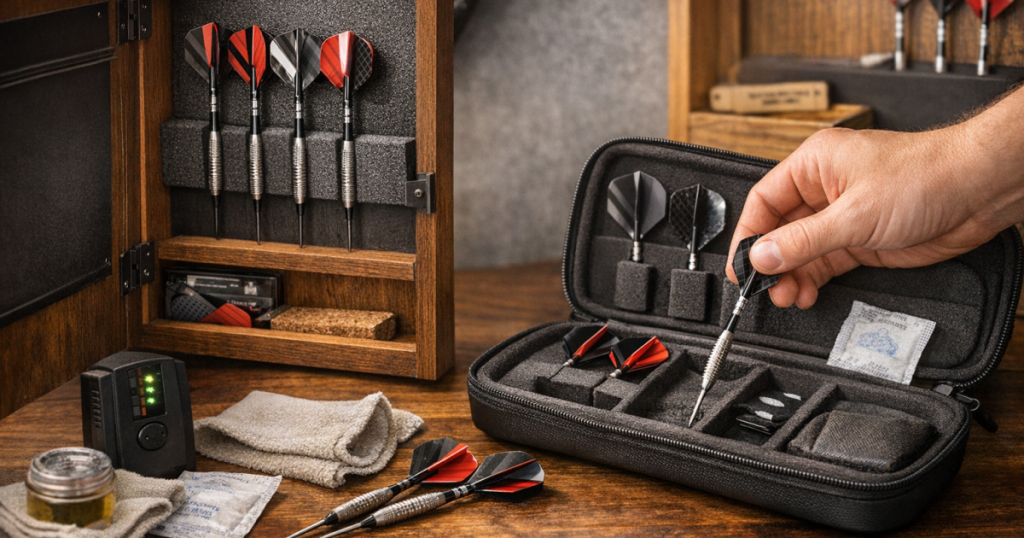
Steel-tip darts pick up moisture, sweat and finger oils every time they are handled, so the best way to prevent rust on darts is to clean and dry them before they go back in the case. A good storage routine takes less than a minute after a throw, but it makes a big difference if your darts live in a spare room, garage conversion or cupboard.
The main risk is not usually dramatic orange rust overnight. It is slow dulling around the points, staining in grip grooves and gritty residue that makes your setup feel neglected.
Main points
- Wipe the points and barrels after every session, even if they look dry.
- Never seal damp darts inside a case, wallet or cabinet drawer.
- Use point protectors so steel tips do not scratch other accessories or hold moisture against foam.
- Keep darts away from damp sheds, cold external walls, windowsills and drinks areas.
- Add a small silica gel sachet to closed storage, then check and refresh it as needed.
- Inspect points regularly so small rust marks can be dealt with before they become rough or pitted.
Why steel-tip darts rust in home setups
Steel-tip points are exposed metal. Even when the barrel is made from a more corrosion-resistant alloy, the points can still react with moisture and salts from your hands. If you throw in a cool room and then put the darts straight into a closed case, the trapped moisture has nowhere to go.
UK homes can make this more noticeable in winter. A darts setup in a conservatory, garage conversion, utility room or spare bedroom may swing between cold and warm conditions. Condensation on windows, a damp exterior wall or a case stored on the floor can all contribute. You do not need a specialist storage system; you need a dry, consistent place and a routine that stops moisture being trapped against metal.
Rust also starts where dirt collects. Knurled grips, ring cuts and the shoulder where the point meets the barrel can hold tiny amounts of sweat, chalky residue and dust from the board. That is why a quick wipe around the whole dart is more useful than only checking the point.
Step 1: Wipe darts down as soon as you finish
At the end of a session, remove each dart from the board and wipe the point first, then the barrel. A dry microfibre cloth is enough for normal use. If the darts feel sticky or visibly dirty, use a barely damp cloth on the barrel, then dry the dart thoroughly before storing it.
Pay attention to three areas:
- The point: wipe from the barrel towards the tip, keeping fingers clear of the sharp end.
- The point-to-barrel join: this is where moisture and dust often gather.
- Grip grooves: rotate the dart in the cloth so the fabric catches residue in the cuts.
Avoid leaving cleaning fluid, water or oil sitting on the dart. If you use any metal-safe cleaner, apply it to the cloth rather than soaking the dart, and always finish with a dry wipe. The aim is not to polish the darts to showroom condition; it is to remove the substances that encourage corrosion.
Step 2: Let them air before closing the case
One of the easiest mistakes is putting warm, handled darts straight into a zipped case or plastic box. If you have played for a while, leave the case open for a few minutes while you tidy the oche, scoreboard or flights. This gives any remaining surface moisture time to evaporate.
Do not speed things up by putting darts on a radiator. Sudden heat is not needed, and it can be unhelpful for flights, shafts, adhesives or case materials. A room-temperature dry surface is better. If you use a darts cabinet, leave the doors open briefly after play rather than closing everything immediately.
For shared homes and family spaces, balance drying time with safety. Sharp darts should not be left loose on a table where children, pets or visitors can reach them. If access is a concern, use a temporary high shelf while the darts air, then move them into proper storage. For a more complete approach, see the guide to setting up child-safe storage for darts gear.
Step 3: Protect the points before storing
Point protectors are not just for avoiding scratches. They stop the steel tips from rubbing against other darts, metal tools, spare shafts or case fittings. They also help keep the sharp ends from puncturing pockets in soft wallets, where moisture and dirt can collect.
Use a point guard, fitted case channel or soft tip cover that holds the dart securely without forcing the point into damp foam. If a foam insert smells musty, feels wet or has visible marks, let it dry fully away from the darts. Replace badly worn inserts rather than pushing clean darts back into dirty storage.
If you store darts assembled, make sure flights are not being crushed. If you store them broken down, keep points capped and avoid mixing loose steel points with flights, stems and spare rings. A simple divided box or wallet pocket keeps accessories tidy and reduces the chance of a rusty point contaminating clean kit.
Step 4: Choose a storage spot that stays dry
The best storage place is boring: dry, stable and away from splash zones. A drawer in a living room, office or spare bedroom is usually better than a shed, car boot, porch or garage shelf. Darts left in sports bags can rust quickly if the bag also holds wet shoes, coats or drinks bottles.
Avoid these common storage spots:
- Windowsills: temperature swings and condensation make them poor long-term storage areas.
- Cold external walls: cupboards against uninsulated walls can feel dry but still trap damp air.
- Under the board on the floor: floor-level storage is more exposed to dust, spills and knocks.
- Near kettles, sinks or utility appliances: steam and splash risk are unnecessary around steel points.
- Inside a damp cabinet: wooden cabinets can hold moisture if fitted in a cold or poorly ventilated room.
If your darts area is also used as a work-from-home room or family room, keep storage predictable. A labelled drawer, wall cabinet or dedicated kit box means darts are not left on the oche, sofa arm or windowsill after a quick practice session.
Step 5: Use silica gel in closed cases
A small silica gel sachet can help in a closed darts case, especially if the case is kept in a cooler part of the house. It is not a cure for wet storage, but it can absorb minor humidity inside the case.
Put the sachet in a pocket where it will not rub against the dart points. Do not tear it open, and keep it away from children and pets. Many sachets can be refreshed or replaced, but follow the instructions supplied with the type you use. If the case still smells damp or the darts show repeated rust marks, the storage location is the problem, not the sachet.
Step 6: Keep maintenance tools separate
Dart tools, spare points, sharpening stones and small repair accessories are useful, but they should not rattle loose beside clean darts. Metal-on-metal contact can scratch finishes and create small rough areas where grime sticks. Store repair tools in a separate pocket or small tin, ideally dry and closed.
If you use a point sharpener, re-pointer or pliers, clean the dart afterwards. Fine metal dust can sit around the point join and encourage staining. For safe handling habits, especially when changing points or using small tools at home, read the guide on using a dart repair tool kit safely.
Do not over-sharpen points in an attempt to remove every mark. A lightly marked but smooth point is usually better than an aggressively filed one. The point should enter the board cleanly without feeling jagged, hooked or flaky.
Step 7: Check your darts on a simple schedule
A quick inspection stops storage problems becoming performance problems. You do not need a formal maintenance log; just build the check into your normal home setup routine.
After every session
- Wipe the points and barrels.
- Check that points are dry before capping or closing the case.
- Put flights, shafts and tools back into separate pockets.
Once a month
- Look for dull orange or brown marks around the points.
- Check case pockets for musty smells, damp foam or grit.
- Refresh or replace silica gel if it is no longer effective.
- Clean dust from the cabinet, drawer or storage box.
Before a longer break
- Give each dart a careful dry wipe.
- Make sure the case and all accessories are fully dry.
- Store the case away from floors, windows and exterior walls.
- Remove any damp cloths, old flights or loose packaging from the storage area.
What to do if you already see rust
Light surface rust on a steel point can often be cleaned before it becomes a real issue. Wipe the point with a dry cloth first. If the mark remains, use a gentle abrasive pad or very fine metal-safe cleaning method, working carefully along the point rather than across it. Keep the tip controlled and away from fingers.
After cleaning, wipe away residue and make sure the point is dry. If the point feels pitted, rough or flaky after cleaning, consider replacing it rather than continuing to throw. Rough points can damage the board fibres and make darts harder to remove cleanly.
Be cautious with oil. A tiny amount applied to a cloth can help protect bare steel during long storage, but the dart should be wiped almost dry afterwards and cleaned before play. Oily points can mark hands, cases and potentially the board surface, so this is better treated as a long-storage step rather than a normal pre-match habit.
Build storage into the whole darts area
Rust prevention is easier when the rest of the setup has a place for everything. If your cloth, spare flights, point caps and case are within reach, you are more likely to pack away properly. If everything is scattered around the room, darts tend to be left in the board or on a shelf until the next session.
A home darts area works best when storage, safety and protection all support each other. Keep darts off the floor, keep sharp points covered, and store accessories where they cannot be knocked into the throwing lane. If your board area is still being organised, the advice on protecting floors and walls around a dartboard pairs neatly with a tidy storage routine.
Helpful questions
Can I leave steel-tip darts in the dartboard between sessions?
It is better not to. Leaving darts in the board exposes the points, can put unnecessary pressure on the sisal, and makes it easier for darts to be knocked or handled carelessly.
Should darts be stored assembled or taken apart?
Either is fine if the points are dry and protected. Assembled storage is quicker, while broken-down storage can protect flights if your case has good separate compartments.
Is a garage safe for storing steel-tip darts?
Only if it stays dry and fairly stable. Many UK garages become cold and damp, so indoor storage in a drawer or cabinet is usually safer for steel points.
Do tungsten darts rust?
The barrel material may resist corrosion better than plain steel, but the steel points can still rust. Always treat the points as the vulnerable part.
How often should I replace point protectors?
Replace them when they split, hold dirt, smell damp or no longer stay securely on the point. A loose or dirty protector defeats the purpose of using one.
Final thoughts
Good dart storage is mostly habit: wipe, dry, cap and put the darts somewhere stable. Keep damp air, loose tools and dirty case pockets away from steel points, and your darts will stay smoother, cleaner and more reliable between sessions. It is a small routine, but it makes the whole home setup feel sharper and better looked after.