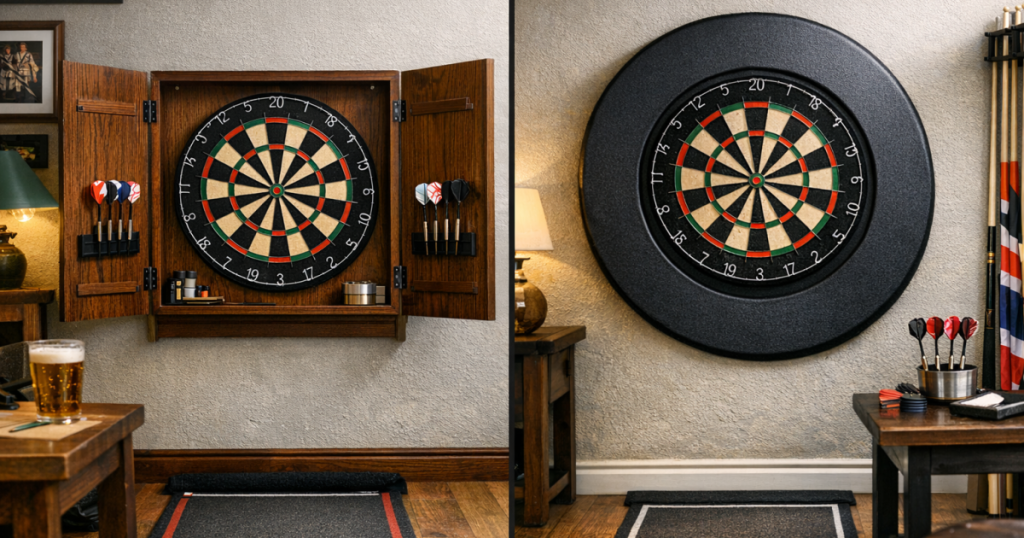
Choosing between a dart cabinet vs surround is mostly about wall protection, storage and how much space you want the board to occupy when nobody is playing. A cabinet makes the board look tidier and gives you somewhere for darts and chalk, while a surround is the simpler protective ring that suits compact or flexible home setups.
The better fit depends less on which one looks smarter online and more on your wall, room layout, throwing accuracy, scoring method and whether your darts area doubles as everyday living space.
At a glance
- Choose a cabinet if you want doors, built-in storage, a more furniture-like finish and a neater look when the board is not in use.
- Choose a surround if your priority is quick wall protection, minimal bulk and an easier fit in a tight corner.
- Choose both only with care because some cabinets leave limited clearance around the board once a surround is added.
- Check your space first because door swing, scoreboard position and walkway clearance matter as much as the board itself.
- For rentals, the fixing method can be the deciding factor, especially if you need to avoid permanent marks.
Start with the job you need it to do
A cabinet and a surround are not just two versions of the same accessory. They solve different problems. A surround is mainly there to catch missed darts around the outside of the board. It normally sits close to the board and keeps the setup visually simple. A cabinet is a storage and presentation option: it frames the board, hides it behind doors and often gives you space for basic match accessories.
Before choosing either, confirm the board is already positioned correctly. Wall protection is useful, but it will not fix a board mounted at the wrong height or an oche that creeps too close. If you are setting up from scratch, use this guide to measure dartboard height and throwing distance correctly before buying accessories around it.
Think about your main frustration. If missed darts are peppering the paintwork, a surround is the more direct fix. If darts, chalk, spare flights and a scoreboard are always being moved from a shelf to the oche and back again, a cabinet may improve the whole playing routine. If the board is in a living room, dining area or spare room used for work, the ability to shut the doors can matter more than the extra protection.
Where a cabinet makes more sense
A dartboard cabinet is the neater, more self-contained choice. It works particularly well when the board is in a finished room rather than a garage or utility space. Closed doors hide the board, reduce visual clutter and make the area feel less like a permanent practice zone.
The storage is the main practical advantage. A good cabinet can keep match darts, chalk, a cloth, spare flights and small accessories in one predictable place. That is handy for families, shared homes and anyone who dislikes rebuilding the setup every time they play. If you prefer a traditional chalk or whiteboard scoring layout, cabinet doors can also place scoring panels close to the board without adding a separate item to the wall.
There are trade-offs. Cabinets are wider than the board itself, and the doors need room to open. In narrow alcoves, beside shelves or close to a doorway, that extra width can become awkward. You also need to check depth, because a cabinet can sit proud of the wall and make a compact room feel busier. If the cabinet has internal scoreboards, make sure they are readable from the oche and not hidden by reflections or poor lighting.
For a real-world example of the type of storage-led setup a cabinet can offer, our Dart World Dartboard Storage Cabinet review looks at how a cabinet can tidy up a home oche without turning it into a full pub-style build.
Where a surround is the better fit
A surround is usually the easier answer when wall protection is the main goal. It sits around the board, adds a protective buffer and keeps the playing area fairly compact. For newer players, casual households and anyone practising doubles at home, that extra ring of protection can save a lot of paint touch-ups.
Surrounds are also useful where the board position is temporary or the room has to stay flexible. They do not require doors, side clearance or a dedicated scoring surface. If you already use a separate scoreboard, tablet stand, chalkboard or dry-wipe board, a surround lets you protect the wall without changing the way you score.
The simplicity is the appeal, but there are checks to make. Confirm that the surround suits your board style and sits securely around it. Bristle dartboards are commonly paired with foam or rubber-style surrounds, but you should always verify compatibility with the board and mounting arrangement you own. A board such as the Winmau Blade 6 Triple Core may be paired with a compatible surround, but the retailer listing should still be checked for fit rather than assumed.
A surround is not a full wall shield. It protects the area immediately around the board, not the whole wall, skirting, floor or nearby furniture. If your misses tend to land wide, low or around a painted feature wall, read our advice on how to stop darts marking painted walls around the board before deciding that a surround alone is enough.
Compare the two by room type
Living room or dining room
A cabinet usually looks more intentional in a shared living area. The doors hide the board, and the setup can feel closer to a piece of wall furniture. A surround can still work, but it leaves the dartboard visible all the time unless you remove it after play. If appearance matters to other people in the home, a cabinet often wins.
Garage, shed or utility room
A surround is often enough in tougher spaces where looks are secondary and the board is left ready to play. Cabinets can still help with storage, but dampness, dust and temperature swings are worth considering. Check the material, finish and fixings rather than assuming a cabinet will enjoy garage conditions.
Spare bedroom or office
This is where the decision becomes more balanced. A cabinet keeps the room tidy between sessions, but a surround keeps the setup slimmer. If the board is near a desk, wardrobe or bed, measure door swing and shoulder room before buying a cabinet. A surround may be the more comfortable everyday compromise.
Rental property
Both options can be awkward in rentals if they require fixings the landlord will not accept. A surround may still need a properly mounted board behind it, while a cabinet usually adds more weight and more visible commitment. If you cannot make permanent holes, plan the whole mounting approach before buying the accessory.
Check the space around the board
The most common buying mistake is judging by the board face only. A cabinet or surround affects the wider oche area. Measure the available wall width, nearby furniture, doorways and the path people use to walk through the room.
- Side clearance: cabinets need enough width for open doors. Surrounds need less side clearance but still increase the board’s overall footprint.
- Scoring position: if you score on a cabinet door, check whether left- and right-handed players can see and write comfortably.
- Lighting: cabinet doors can cast shadows or sit close to light rings, while some surrounds may sit better with separate lighting.
- Floor protection: neither option protects the floor from bounce-outs, so consider a mat if darts regularly land point-first below the board.
- Walkways: avoid creating a setup where someone has to pass through the throw line during play.
If your darts area sits in a busy part of the home, choose the accessory that keeps the route clear rather than the one that looks best in isolation. A smart cabinet in the wrong place is still frustrating if the doors block a cupboard or the oche cuts across a walkway.
Storage, scoring and match flow
A cabinet earns its place when it improves the way you use the setup. Being able to open the doors, take out darts, mark the score and close everything away is genuinely convenient. This is especially true for league-style practice at home, doubles practice or family matches where accessories otherwise drift around the house.
A surround is better when you already have a clean scoring workflow. If you use a freestanding scoreboard, a wall-mounted chalkboard or a dry-wipe board positioned separately, you may not need the cabinet’s scoring panels. In that case, a surround gives you protection without changing your routine.
For accessories, be honest about how much you actually want at the board. A small cabinet is useful for darts, chalk and a cloth, but it is not a full storage system for every spare shaft, point and flight you own. If you like keeping all spares close by, you may still need a separate organiser.
Can you use a cabinet and a surround together?
Sometimes, but it is not always a clean fit. The main issue is clearance. A surround adds width around the board, while a cabinet frames the board inside a fixed space. Some combinations will be too tight, prevent the doors closing, cover scoring areas or push the board forward awkwardly.
If you want both, check the exact internal cabinet space, board position, surround thickness and whether the doors can still close without pressing on the surround. Do not rely only on product photos, because a setup that looks possible in one image may depend on a specific board, bracket or cabinet design.
A dedicated surround such as the Winmau Blade 6 Dartboard Surround is best assessed against the board and wall space you already have. If you are set on a cabinet as well, verify the whole combination before ordering rather than assuming all standard-looking darts accessories fit together.
Buying checks before you choose
- Board compatibility: confirm the accessory works with your dartboard type, mounting method and any lighting you use.
- Wall material: plasterboard, brick and stud walls need different fixings. Choose a mounting approach that suits the wall and the weight involved.
- Room layout: measure the full open cabinet width or full surround diameter, not just the board.
- Scoring preference: decide whether you want built-in scoring or a separate scoreboard placed where it is easiest to read.
- Noise and vibration: a cabinet can add a box-like structure around the board, while a surround mainly deals with stray dart marks. Neither is a complete soundproofing solution.
- Maintenance: surrounds may show dart holes and scuffs over time; cabinets may need hinges, door surfaces and scoring panels kept clean.
- Look of the room: choose the option you are happy seeing every day, not just the one that seems most practical during a match.
Main lessons
A cabinet is the better fit when storage, presentation and a shut-away finish matter. It suits rooms where the board is part of the décor and where a tidy match setup is worth the extra wall space.
A surround is the better fit when the goal is simple, effective protection around the board. It is slimmer, easier to live with in tight spaces and usually the more direct answer for missed darts near the trebles and doubles.
If you are still torn, start with the problem you notice most often. Messy accessories point towards a cabinet. Marked paintwork points towards a surround. A cramped room points towards whichever option keeps the oche clear and comfortable.
Helpful questions
Is a dartboard surround enough to protect a wall?
It protects the area immediately around the board, which is where many missed darts land. It will not protect a wide section of wall, nearby furniture, the floor or very low misses.
Does a cabinet make a dartboard quieter?
Not reliably. A cabinet may change the sound, but it is not a proper acoustic fix. For shared walls, focus on how the board is mounted and what sits behind it.
Will any surround fit any dartboard?
No. Many surrounds are made for common bristle dartboard sizes, but you should still check the product listing, board type and mounting arrangement before buying.
Is a cabinet worth it for beginners?
Yes, if storage and tidy presentation matter. If the main beginner issue is missed darts hitting the wall, a surround may be the more useful first purchase.
Which looks better in a home setup?
A cabinet usually looks neater when closed, while a surround looks cleaner during play. The better-looking option depends on whether the board is in a shared room or a dedicated darts space.
Quick Buying Links
Dart Cabinet
Choosing between a dart cabinet vs surround is mostly about wall protection, storage and how much space you want the board to occupy when nobody is playing.
Surround: How to Choose the Better Fit
Worth considering if its strengths better match your needs.