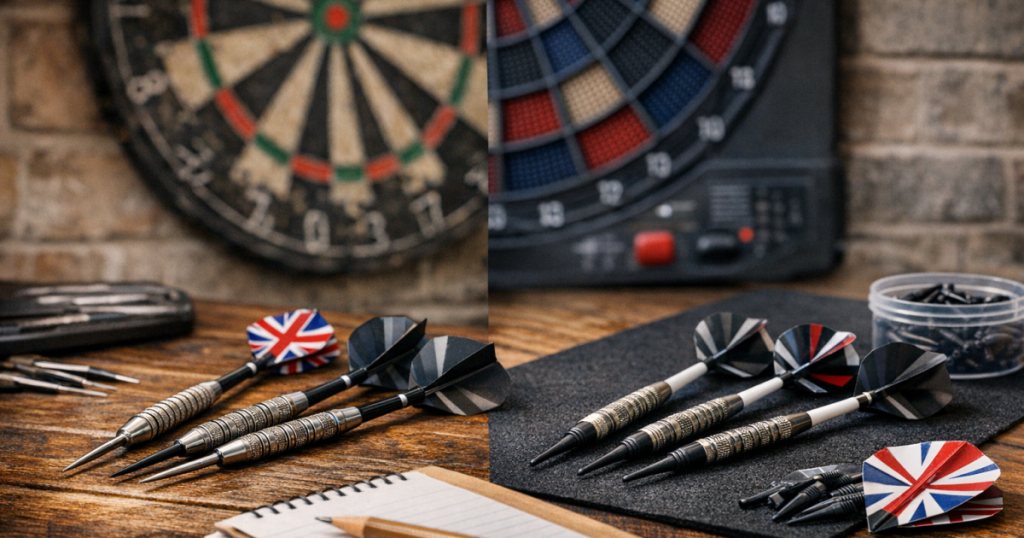
Picking your first proper set, or switching formats, gets much easier once you know where you’ll play. steel-tip vs soft-tip darts is mainly a board-and-venue decision: bristle dartboards use metal points, electronic boards use plastic points, and the wrong type can damage equipment or feel frustrating from the oche.
The short version
Buy steel-tip darts if you are playing on a traditional sisal bristle board, want the classic pub-style home setup, or plan to practise for most UK league and casual steel-tip formats. Buy soft-tip darts if you are using an electronic dartboard, want automated scoring, or need a setup that is a bit friendlier for mixed family use.
The dartboard decides the tip type first. After that, choose by weight, grip, barrel shape, balance, and how much maintenance you are happy to do. A good set is not the one with the most aggressive grip or the flashiest packaging; it is the set that leaves your hand cleanly, lands consistently, and suits the board in front of you.
Step 1: Match the darts to the board
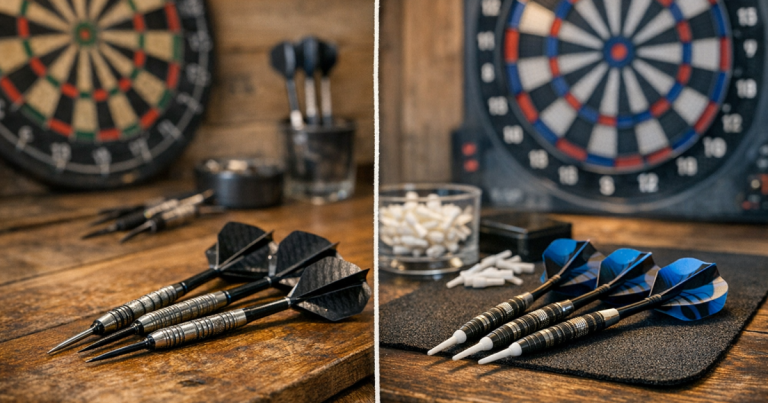
Steel-tip darts are made for bristle dartboards. The point is metal and designed to enter the sisal fibres. They should not be thrown at electronic soft-tip boards because the points can damage the playing surface and scoring segments.
Soft-tip darts are made for electronic boards with plastic segment holes. The tips are replaceable and designed to flex or break before they damage the board. They are not the right choice for a standard bristle board unless you are using conversion points, and even then the feel will not always match a dedicated steel-tip setup.
For a UK home darts room, garage, spare bedroom or hallway setup, the safest buying order is simple:
- Choose the board type first: bristle or electronic.
- Check the recommended dart type in the board instructions.
- Check any maximum dart weight stated by the electronic board maker.
- Buy a dart set that matches that board rather than trying to make the wrong format work.
If you are setting up a new throwing area rather than just replacing darts, also check your throw distance, wall clearance and oche position. The measurements can vary by format, so it is worth reading a dedicated guide to setting out your darts throwing area and oche before you mark anything permanently.
Step 2: Understand how the two types feel
Steel-tip darts usually feel more traditional. They are common in pubs, clubs and home bristle-board setups across Britain, and they tend to offer a wide choice of barrel weights, grip styles and point options. The throw has a solid feel, and the sound of the dart landing in a quality bristle board is part of the familiar home darts experience.
Soft-tip darts often feel lighter in the hand, though there is still plenty of variation between sets. Because plastic tips are replaceable, you need to think about spare tips as part of the setup. Bounce-outs can happen in both formats, but with soft-tip boards you are also dealing with plastic tip condition, board hole wear and the board’s scoring sensitivity.
When people compare steel-tip vs soft-tip darts, they often focus only on the point. The more useful comparison is the whole playing system: board, darts, scoring, noise, maintenance and who will use the setup.
Step 3: Choose the right weight range for your throw
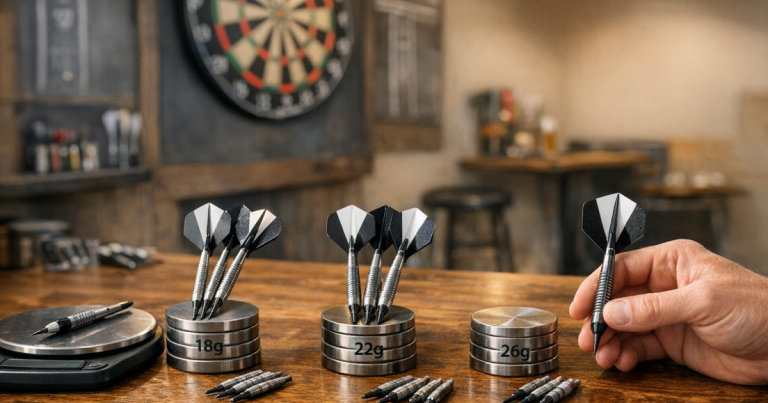
Weight is one of the first things you will notice. A dart that is too light may feel twitchy or difficult to control, while one that is too heavy can pull downwards if your release is not clean. There is no perfect weight for everyone, so treat the first set as a fit decision rather than a status purchase.
For steel-tip darts, many home players start somewhere in the middle of the common retail range rather than going extremely light or heavy. For soft-tip darts, always check the electronic board’s stated limits before buying, because some boards specify what they are designed to accept.
Useful weight checks before you buy:
- If you push the dart rather than throw smoothly, a slightly heavier feel may help you notice your release.
- If your darts drop low even with a confident throw, the weight, balance or flight setup may not suit you.
- If your grouping is wide left and right, look at grip comfort and release before blaming the board.
- If you share the setup, avoid an extreme weight that only suits one player.
Do not overbuy too early. A consistent mid-range set is usually more useful than a specialist barrel chosen before you know your natural throw.
Step 4: Pick a barrel shape you can release cleanly
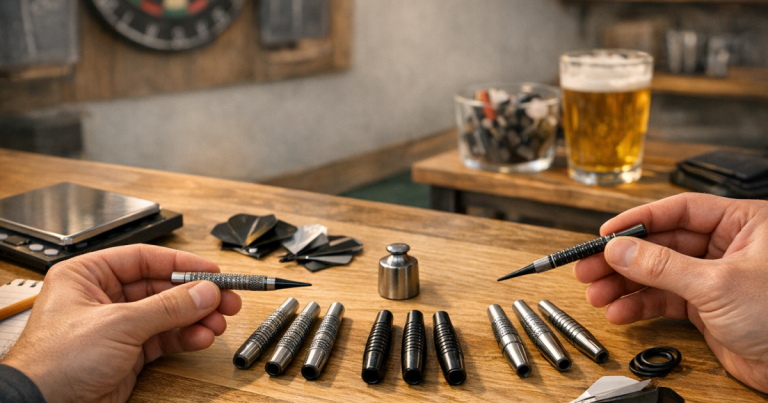
The barrel is where most of the buying decision sits. It controls grip, balance and how naturally your fingers return to the same position each throw. Straight barrels suit many players because they make small grip adjustments easy. Torpedo or scalloped shapes can feel more guided, but they may lock your fingers into one position.
Look for a barrel that gives you a repeatable hold without forcing your hand. Deep rings, cuts and raised grip sections can feel reassuring in a shop, but very aggressive grip is not automatically better. If the dart clings to your fingers for a fraction too long, your release can become inconsistent.
Well-known steel-tip examples you may see while comparing options include Target Darts Phil Taylor Power 9Five and Red Dragon Darts The Legend. Use names like these as handling references rather than shortcuts: verify the weight, barrel profile, grip level and point type on the exact set you are considering.
Step 5: Check points, tips and spares
Steel points and soft tips need different thinking. With steel-tip darts, the point should be straight, secure and suitable for your board. Points can become blunt or burred over time, and rough points can pull sisal fibres or mark surrounds. You do not need to obsess over specialist point styles as a beginner, but you should keep them clean and inspect them regularly.
With soft-tip darts, spare plastic tips are part of normal ownership. Tips can bend, loosen or snap, so it is sensible to keep replacements with your darts. Check the thread type before buying spares; many soft-tip darts use common thread standards, but you should not assume every packet will fit every barrel.
Soft-tip sets worth handling alongside other options include Harrows Wolfram Infinity Soft Tip Darts and Target Luke Littler Loadout Soft Tip Darts. As with steel-tip darts, the useful checks are not the marketing claims but the fit in your hand, the supplied point type, the thread compatibility and the total feel once flights and shafts are fitted.
Step 6: Think about your room, noise and scoring style
Steel-tip darts suit a classic bristle-board setup, but they bring a few room-planning responsibilities. Misses can mark walls, points can damage unprotected flooring, and the board needs to be mounted securely at the correct height. A surround, cabinet or protective backing is a sensible part of the buying plan, not an afterthought.
Soft-tip electronic boards can be appealing if you like automatic scoring or casual games with visitors. They can still make noise, and bounce-outs can still happen, but the plastic tips and electronic scoring format change the feel of the session. Some players love the convenience; others prefer chalk, marker pens or a traditional scoreboard.
If your home setup is in a shared space, also think about storage between sessions. Darts should not be left loose on a table, window sill or sideboard, especially where children or visitors might pick them up. A small case, high cupboard or lockable box is a simple upgrade; for more ideas, see this guide to child-safe storage for darts gear.
Step 7: Decide based on your playing goal
If you want to practise for pub matches, local leagues or a traditional home board, steel-tip is usually the natural route. It mirrors the most common UK bristle-board environment and gives you a broad choice of darts, boards, surrounds and accessories.
If you want social games, automatic scoring and an electronic-board format, soft-tip makes more sense. It can be a good fit for family games rooms, casual gatherings and players who enjoy fast game modes without manual marking.
Here is the practical split:
- Choose steel-tip for a bristle dartboard, traditional practice, league-style routines and the widest accessory ecosystem.
- Choose soft-tip for an electronic dartboard, automated scoring and replaceable plastic tips.
- Avoid mixing formats unless the product specifically supports it and you understand the compromises.
- Prioritise comfort over brand, packaging or what another player throws.
Step 8: Inspect the full setup before buying extras
A dart set is only one part of the playing feel. Shafts, flights, tip condition, board quality, lighting and oche placement all affect consistency. Before buying several sets, get one suitable set working properly and make small changes one at a time.
For steel-tip darts, keep an eye on moisture and storage. Metal points can suffer if they are stored damp or left in poor conditions, particularly in garages, sheds or cold spare rooms. If your darts live outside the main heated part of the house, read up on how to store steel-tip darts to prevent rust.
For soft-tip darts, keep spare tips in your case and replace damaged ones promptly. A bent tip can alter entry angle, while a loose tip can make the dart feel inconsistent on release. It is a small detail, but it makes casual sessions much less annoying.
Common questions
Can I use soft-tip darts on a normal bristle dartboard?
Not as standard. Soft plastic tips are designed for electronic boards. Some players use conversion points, but if your main board is bristle, a dedicated steel-tip set is the cleaner choice.
Are steel-tip darts better than soft-tip darts?
Neither is better in every situation. Steel-tip is better for traditional bristle-board practice, while soft-tip is better for electronic boards and automated scoring.
Do beginners need expensive darts?
No. Beginners need darts that match the board, feel comfortable, and are consistent enough to practise with. Spend on suitability first, then refine later.
Can children use soft-tip darts safely?
Soft-tip darts reduce the risk compared with metal points, but they are still throwing equipment. Supervision, clear rules and safe storage still matter.
Should I buy one set for everyone at home?
For occasional family games, one shared set can work. If people practise regularly, separate sets are better because weight, grip and balance preferences quickly differ.
Key takeaways
A sensible steel-tip vs soft-tip darts decision starts with the board, not the brand. Steel-tip darts belong with bristle boards and traditional practice. Soft-tip darts belong with electronic boards and plastic-tip scoring systems. Once compatibility is settled, focus on weight, barrel comfort, grip, spares and how your room will actually be used.
If you are unsure between two sets, choose the one that feels easiest to release the same way three throws in a row. That repeatable feel will help your game far more than chasing the most advanced-looking barrel on the shelf.