Shared walls, hard floors and late-evening practice can make a home darts setup feel much louder than it does in the room. If you need to make a dartboard quieter for neighbours, the aim is to reduce vibration first and airborne noise second, without making the board unstable or changing the throwing setup.
The best fixes are usually simple: move the board away from the party wall where possible, tighten anything that rattles, add mass and isolation behind the board, and soften noise around the oche.
Safety note: Drilling into walls, moving fixed brackets or altering wall linings can involve hidden cables, pipes and party-wall considerations; this work should be carried out by a qualified professional to comply with UK safety requirements and relevant building standards.
The short version
Most dartboard noise is not the dart itself. It is the impact travelling through the board, bracket, wall and floor. That is why a thin foam square behind the board rarely solves the problem on its own.
- Move the board away from a shared wall if you can.
- Stop rattles before adding extra materials.
- Add a solid backing panel to spread impact rather than relying on soft foam alone.
- Use isolation between the backing and wall, such as dense rubber or cork where it can be fitted safely.
- Soften floor noise with a mat, rug or layered oche area.
- Keep practice to neighbour-friendly times if the wall or floor still carries sound.
A quiet setup is about layers. One change might help a little; three or four sensible changes together usually make the biggest real-world difference.
Step 1: Work out what noise the neighbour is hearing
Before changing the setup, identify the type of noise. Stand in the next room, hallway or outside the room while someone throws a few darts. You are listening for four different things.
- A sharp thud when the dart hits the board.
- A dull knock travelling through the wall.
- A rattle from the bracket, cabinet, light, surround or loose screws.
- Floor noise from stepping forward, retrieving darts or dropping darts onto hard flooring.
If the sound is mainly a rattle, fixings and accessories are the first place to look. If it is a deep knock through the wall, the issue is vibration transfer. If it is most obvious downstairs or next door through the floor, the oche area needs attention as well as the board.
Do this test before and after each change. It stops you spending time on the wrong part of the setup and helps you judge whether each fix has genuinely helped.
Step 2: Avoid the party wall if the room allows it
The single most effective change is often location. A dartboard mounted on a shared wall can send impact directly into the neighbour’s room, especially in terraced houses, semis and flats. If another wall is available, even moving the board to an internal wall can reduce how far the impact travels.
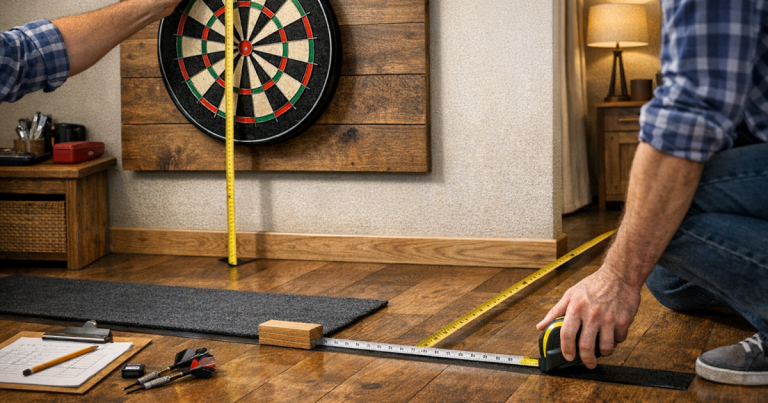
Check the throwing lane before moving anything. You still need a clear line to the board, enough space behind the oche, and a safe area around the throw. Do not squeeze the setup into a narrow route where people will walk across the throw line.
If wall mounting is the main problem, a freestanding setup can be worth considering because it separates the board from the wall. It will not remove all sound, and the stand still needs to be stable, but it can reduce wall-borne knocking in awkward rooms. For more detail on this approach, see our guide to setting up a freestanding dartboard without drilling.
Step 3: Remove rattles before adding padding
A loose setup always sounds worse. Small rattles can make neighbours think the whole wall is being knocked, even when the actual dart impact is modest.
Check these areas first:
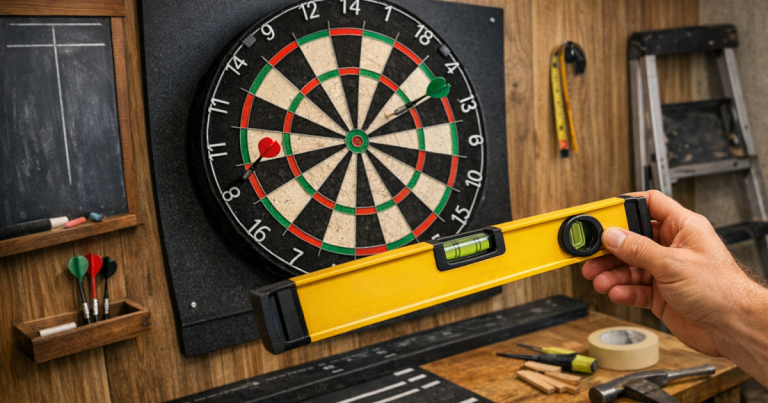
- The centre screw and bracket behind the board.
- Any cabinet hinges, doors or magnetic catches.
- The dartboard surround, especially if it is not sitting evenly.
- Wall-mounted lights, ring lights or spotlights near the board.
- Loose shelves, pictures or tools on the same wall.
- The board itself, particularly if it wobbles when you pull darts out.
A board should sit firmly, but not be forced into an uneven position. If it rocks, the bracket may not be seated properly, the wall surface may be uneven, or the board may need small stabilising pads at the back. Use materials that keep the board level and secure; do not wedge in thick soft foam if it makes the playing face move or bounce.
Step 4: Add mass behind the board
Thin, soft materials can absorb a little surface noise, but they rarely stop a solid knock from travelling through a wall. A better approach is to spread the impact over a larger, heavier surface.
A common home setup is a solid backing panel behind the board, mounted securely and wide enough to protect the area around it. The panel might be timber, a purpose-made backboard, or another firm board suitable for the room. The point is not just wall protection; it also helps distribute the force of dart impact rather than concentrating it through one small bracket point.
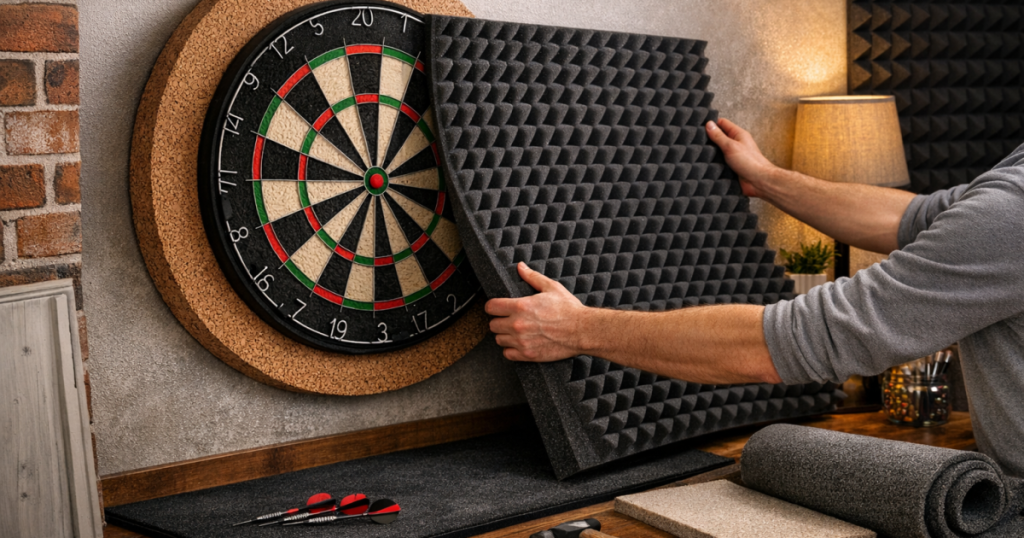
For a quieter result, avoid fixing the board directly to a bare shared wall if you have other options. A backing panel with a small amount of dense isolation between the panel and the wall can work better than board-to-wall contact. Dense rubber, cork or specialist isolation pads are more useful for vibration than very soft foam, which can compress, wobble or make the board feel springy.
Keep the board height accurate after adding any backing. If the board face sits further out from the wall, the oche distance is still measured to the face of the board, not the wall behind it.
Step 5: Use a surround to quiet missed darts
A surround is mainly there to protect the wall from missed darts, but it can also soften the sound of misses. A dart landing in a surround is usually less harsh than one hitting painted plaster, a door, a cabinet edge or exposed timber.
The important point is coverage. A thin ring only helps where it actually catches the dart. If your misses tend to land high, low or outside the usual ring area, you may need a larger backing zone around the board rather than relying on a standard surround alone.
For help judging how much coverage you need, read the dartboard surround thickness, coverage and bounce-out protection guide. It is especially useful if your board is near a shared wall, a door frame or a finished plaster surface you want to keep mark-free.
Step 6: Quiet the oche and floor area
Neighbours do not only hear darts hitting the board. In flats and upstairs rooms, the floor can be just as important. Footsteps, chair movement, dart cases placed down heavily and darts dropped onto laminate or tiles can all carry.
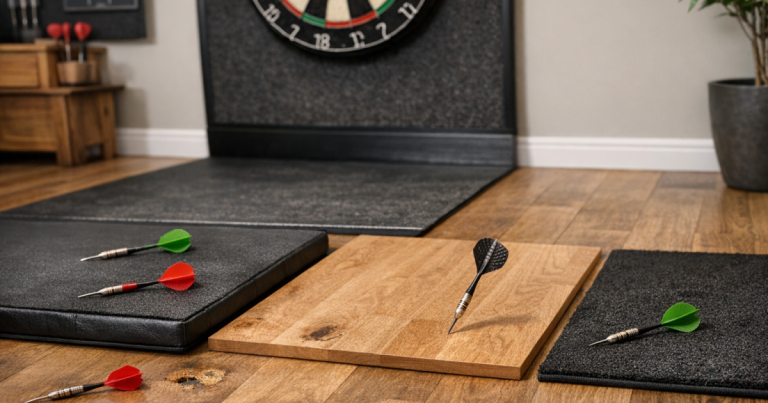
A dart mat, rug or layered floor area helps in two ways: it softens movement around the oche and reduces the sharp sound of dropped darts. If you already use a hard oche strip, check whether it taps or shifts when you step on it. A thin anti-slip layer underneath may make it feel more settled.
If the oche area is the loudest part of the setup, our guide on making a darts mat and oche setup quieter covers the floor side in more detail.
Small habits help too. Retrieve darts calmly rather than stepping heavily, keep a soft tray or case nearby for spare darts, and avoid practising in hard-soled shoes on timber or laminate flooring.
Step 7: Think about doors, windows and room acoustics
Airborne sound is usually less of a problem than wall vibration, but it still matters. A bare room with hard walls and hard flooring will sound sharper than a furnished room with curtains, rugs and soft seating.
You do not need to turn the room into a recording studio. Simple domestic changes can take the edge off the sound:
- Close the room door during practice.
- Add a rug if the room has hard flooring.
- Use curtains or blinds where windows reflect sound.
- Keep the board away from hollow doors where possible.
- Avoid placing the setup in an empty garage corner with bare blockwork unless you add some soft surfaces.
Cabinets can be useful for tidiness and wall coverage, but they can also rattle if the doors are loose. If you use one, check that the hinges and catches are secure and that nothing inside vibrates when darts hit the board.
Step 8: Set neighbour-friendly practice habits
Even a well-treated board can be noticeable late at night, particularly in older properties. If the setup is near a bedroom wall, timing matters as much as materials.
Try to keep longer practice sessions to reasonable hours and avoid rapid-fire throwing if the wall carries sound. A quick chat with a neighbour can also help if you have a good relationship. You do not need to make it formal; just asking whether the noise is worse at certain times can tell you whether the issue is the board, the floor or the timing.
If you play online darts or run games with friends at home, voices and celebrations can become the louder part of the session. In that case, closing doors, moving speakers away from shared walls and keeping the social side in check may help as much as altering the board.
Common mistakes that make a board noisier
- Putting very soft foam directly behind the board so it wobbles or feels unstable.
- Leaving the bracket loose and trying to hide the rattle with extra padding.
- Mounting the board on the thinnest shared wall because it is the easiest space.
- Forgetting that floor noise can travel through flats and upstairs rooms.
- Adding a heavy backing panel without checking the wall and fixings are suitable.
- Letting cabinet doors, lights or accessories vibrate with every throw.
The aim is not to make the dartboard silent. It is to stop the impact becoming a hard knock that travels through the building.
FAQ
Can I make a dartboard quieter without moving it?
Yes, but the result depends on the wall. Tightening the bracket, adding a solid backing panel, using dense isolation and softening the floor area can all help. If the board is on a shared wall, moving it may still be the biggest improvement.
Does a dartboard surround reduce noise?
It can reduce the sound of missed darts hitting the wall, but it will not do much for the main thud of darts landing in the board. Treat it as part of a quieter setup, not the whole solution.
Is a freestanding dartboard stand quieter than a wall-mounted board?
It can be quieter for neighbours on the other side of the wall because the board is not fixed directly to it. You may still need to manage floor vibration, stand movement and room noise.
Will a thicker dartboard be quieter?
Board construction can affect how the impact feels and sounds, but thickness alone is not a guarantee. A secure mount, stable backing and reduced wall vibration usually matter more than one board feature.
What is the cheapest first fix to try?
Start by removing rattles and softening the floor. Tighten the mount, check accessories, add a rug or mat, and test again from the neighbouring side of the wall or floor before making bigger changes.
Key takeaways
A neighbour-friendly dartboard setup starts with vibration control. Move the board off a shared wall if the room allows it, make the mount stable, add mass behind the board, isolate where practical, and soften the oche area.
The most reliable approach is to test one change at a time. Listen from outside the darts room, note what improves, and build up the setup in layers. That gives you a quieter board without spoiling the feel of your throw or turning the room into an over-complicated project.