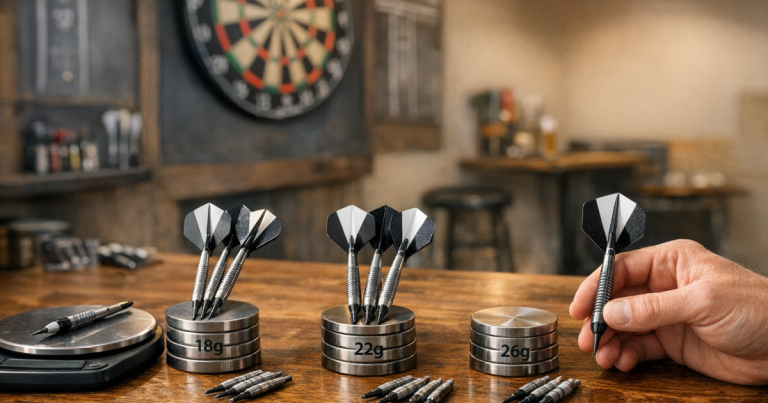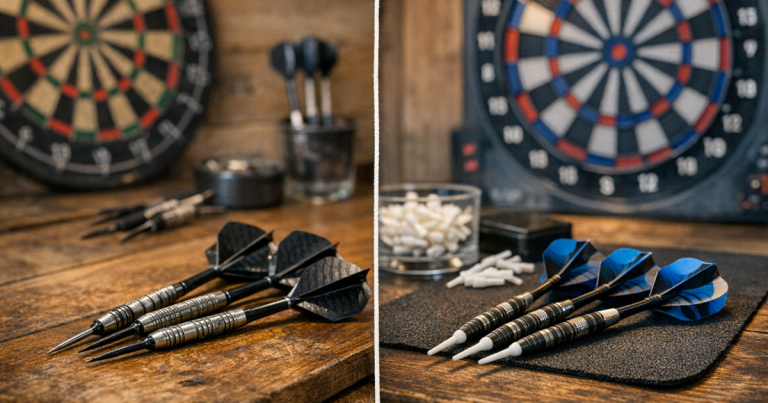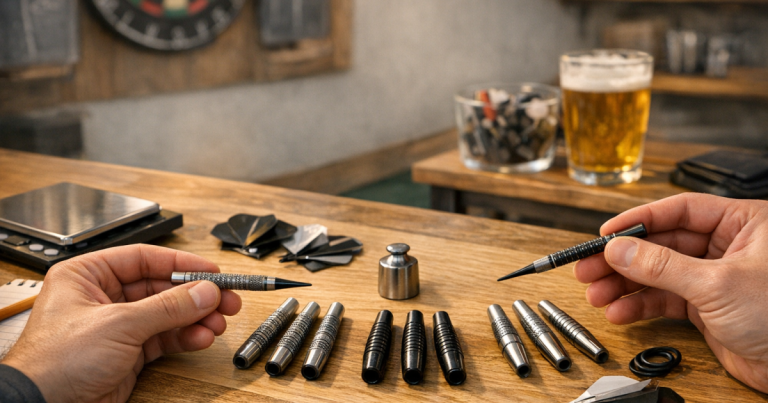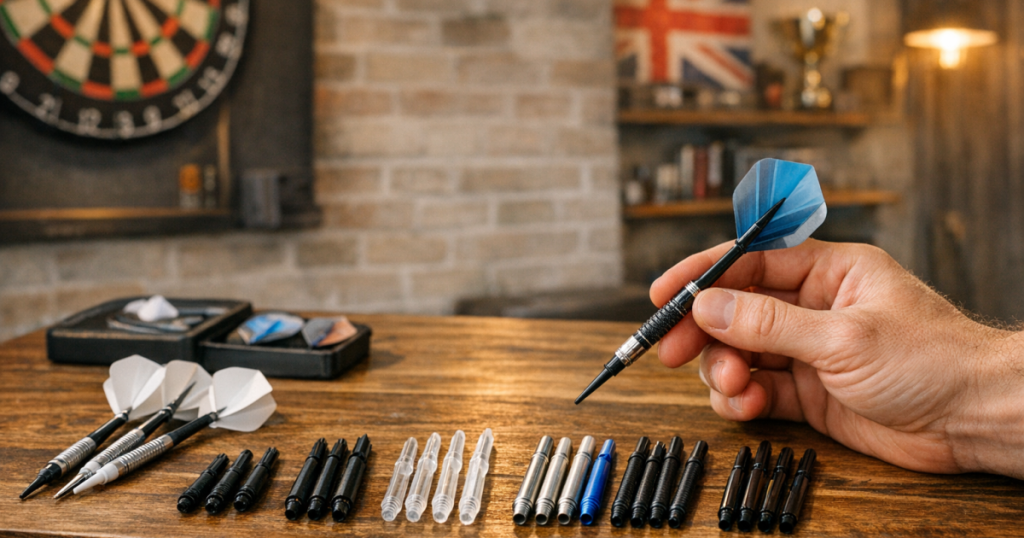
The right shaft can make a familiar dart feel cleaner, steadier and easier to repeat. Choosing poorly can make the same barrel feel awkward, kick up strangely in the board or crowd your next dart. When you choose dart shafts around your throw rather than copying someone else’s setup, you get a dart that leaves your hand cleanly and lands at a repeatable angle.
Shafts are not magic fixes, but they are one of the easiest parts of a dart to experiment with at home. A sensible test uses your current darts, one change at a time, and a few honest practice scores rather than guesswork.
The short version
Start with the dart you already throw best, then change only the shaft length or material for a few sessions. Watch how the dart sits in the board, how tightly the flights group, and whether the rear of the dart is getting knocked away by later throws.
- Shorter shafts often make the dart feel more compact and can reduce rear-end movement for some throwers.
- Longer shafts can steady the dart for some players, but may create more flight contact in tight groups.
- Nylon-style shafts are inexpensive and easy to replace, making them ideal for testing.
- Aluminium, carbon and hybrid designs can feel firmer, but check flight fit and durability before committing.
- Your best choice is the one that improves consistency, not the one that looks most professional.
What a shaft actually changes
The shaft, also called a stem, sits between the barrel and the flight. It affects where the flight sits behind the barrel, how the dart balances in the air, and how much room your next dart has when it approaches the treble bed.
Because the shaft works with the barrel, point and flight, there is no universal “best” size. A medium shaft on a slim straight barrel can behave differently from the same shaft on a front-weighted torpedo barrel. Your grip position matters too. If you hold near the front, the rear setup may feel less noticeable in the hand but still influence the landing angle.
Before buying several sets, look at your current dart in the board. If it lands tail-up, tail-down or at a sideways lean, that gives you a useful starting point. You are not trying to force every dart to sit perfectly flat; you are trying to make its angle repeatable enough that your following darts have a clear route into the target.
How to choose dart shafts step by step
1. Start with your current throw, not the catalogue
Throw three normal visits at treble 20, three at treble 19 and three at bull. Do not change your stance or rhythm. Note whether your darts enter the board at a consistent angle and whether the flights are blocking the bed. This quick baseline tells you what problem, if any, the shaft needs to solve.
If your home setup is not consistent, fix that before judging new stems. A mat that moves, a vague throw line or cramped stance can make shaft testing misleading. For setup issues that affect release and alignment, it is worth checking common darts mat and oche setup mistakes before blaming the darts.
2. Test length before material
Shaft length is usually the biggest change you will feel. Retail labels vary, so compare the actual overall length stated by the seller or manufacturer rather than relying only on terms such as short, intermediate or medium.
If your darts sit very tail-down or feel like they are dropping early, try a slightly longer rear setup and see whether the flight stabilises sooner. If the back of the dart kicks high, wobbles, or seems to get in the way of following darts, try a shorter option. Keep your flights the same during this test, otherwise you will not know which change made the difference.
3. Match the shaft to your grouping pattern
Players who group tightly can run into flight clashes. A longer rear end gives more surface for later darts to hit. That does not automatically make long shafts bad, but it means you should watch what happens after your first dart lands in a treble.
If your second and third darts deflect off flights, sit at odd angles or fall out after heavy contact, your shaft and flight combination may be too obstructive for your grouping style. Bounce-outs can also come from board condition, point shape and wire design, so use this alongside the wider checks in dartboard bounce-outs explained.
4. Choose a material that suits how you play
Nylon and plastic-style shafts are popular because they are light, affordable and easy to replace. They are a good starting point when you are still learning what length suits you. They can loosen or damage over time, so keep spares handy and check the thread before match night.
Aluminium shafts can feel more rigid and may appeal if you like a firmer rear setup. They can also need closer attention to flight fit, as some flights can loosen or mark depending on the design. Carbon and composite shafts sit in the premium end of the accessory market, but the same rule applies: verify length, fit and replacement availability rather than assuming dearer means better for your throw.
For a simple, recognisable starting point, Harrows Supergrip Shafts are commonly used by players testing different stem lengths. Target Pro Grip Shafts are another familiar option in UK darts shops. Treat named examples as test candidates, not automatic upgrades.
5. Check flight grip and compatibility
A good shaft should hold the flight securely without making it awkward to replace. If flights fall out every few visits, your rhythm suffers and your setup becomes frustrating. If the fit is too tight, you may damage flights during changes.
Some shaft systems use rings, punched flights or moulded flight arrangements. These can improve security for certain players, but they also affect how easy it is to mix parts from different brands. Before changing system, check whether your preferred flights still fit and whether replacement parts are easy to buy in the UK.
Common throw styles and useful starting points
Smooth, straight throwers
If your throw is smooth and the dart already flies with little wobble, avoid overcorrecting. Start with a similar length to your current setup and test small changes. A dramatic switch from medium to very short may make the dart feel lively in a way that hurts your grouping.
Hard, direct throwers
A faster throw can make a dart feel more sensitive to release timing. Some hard throwers like a compact rear end because it gets out of the way quickly. Others prefer a steadier stem and flight combination to calm the dart before it reaches the board. Test both with the same target routine rather than relying on feel alone.
Looping or lobbed throws
If your dart travels in a higher arc, watch the landing angle carefully. Too much rear length can create extra obstruction if the dart lands tail-up. A small change in shaft length can alter how open the bed looks for the next dart.
Players who grip near the rear
Rear grippers should pay attention to finger contact with the shaft and flight. A shaft with ridges, grooves or a prominent flight holder can become part of your grip whether you intend it or not. If the stem distracts your release, look for a cleaner shape or adjust length so your fingers sit comfortably on the barrel.
A simple home testing routine
Buy no more than two alternative lengths to begin with. Use your normal barrel, point and flight shape, then test one shaft set over several short sessions. A single lucky leg tells you very little; repeated grouping tells you more.
- Warm up with your usual setup for five minutes.
- Throw 30 darts at treble 20 and note grouping, angle and flight clashes.
- Throw 30 darts at treble 19 to check whether the result changes on a different bed.
- Throw 15 darts at bull to see how the dart behaves on a smaller target.
- Repeat the same routine with the alternative shaft.
- Keep the better-feeling option for a full practice night before deciding.
Store the spare sets clearly so you can repeat the test later. A compact case makes this easier, particularly if you carry multiple stems, flights and points to league nights or a friend’s board. The Target Darts Case review is useful if your accessories are starting to rattle around loose in a pocket or old tin.
Mistakes that lead to the wrong choice
- Changing everything at once: New shafts, flights and barrels in one session make it impossible to identify what helped.
- Copying a professional setup: A pro’s shaft length suits their barrel, grip, release and board angle. It may not suit yours.
- Judging by appearance: A sleek stem is pointless if your flights fall out or your grouping worsens.
- Ignoring replacement cost: Shafts are wear items. Check availability and price in the UK before settling on a less common system.
- Testing only treble 20: A setup that feels good on one bed may crowd awkwardly on others.
When a shaft change will not solve the problem
If your darts spray left and right, the main issue may be alignment, release or stance rather than the stem. If they enter the board inconsistently from visit to visit, look at grip pressure and follow-through. If they bounce out regularly, inspect the board and points as well as the shaft and flight setup.
It is also worth checking whether your flights are damaged. Torn or warped flights can make a good shaft look bad. Replace tired flights before spending money on multiple stem sets, then test again.
Things readers ask
Are short dart shafts better than medium shafts?
Not automatically. Short shafts can make a dart feel compact and reduce rear obstruction, but medium shafts may give a steadier flight for some throws. The better choice is the one that groups more consistently for you.
Should beginners use nylon or aluminium shafts?
Nylon-style shafts are usually the easier starting point because they are inexpensive and simple to replace. Aluminium can be worth trying once you know what length you prefer and want to compare a firmer feel.
How many shaft lengths should I test?
Two alternatives are enough at first: one shorter and one longer than your current setup. More than that can make the decision muddled, particularly if you are still developing a repeatable throw.
Do dart shafts affect bounce-outs?
They can contribute when flights are heavily blocked or the dart is deflected by previous darts. They are not the only cause, so also check board condition, point grip, wire design and throwing angle.
How often should I replace shafts?
Replace them when threads wear, flights no longer hold securely, the stem bends, or damage becomes visible. Keep spares in your darts kit so a small fault does not interrupt practice or a match.
Main points
The best dart shaft is the one that works with your barrel, grip and release. Start with length, keep the rest of the dart unchanged, and judge the result by grouping, landing angle and how cleanly later darts enter the bed.
For most home players, the smartest route is simple: use an affordable test set, record what changes, and only move to premium materials once you know the length and feel that suit your throw.